The professional services sector - encompassing corporate service providers (CSPs), law firms, wealth managers, and consultants - has long been defined by discretion, heritage, and tradition. But in today's fiercely competitive market, tradition shouldn’t mean static.
As an agency, we have partnered with over 10 CSPs, TSCPs, and professional service providers to refresh their identities, modernise their strategies, and launch new websites. Along the way, we’ve learned what works, what falls flat and what it actually takes to build a website that stands out in a crowded B2B landscape.
If your firm is considering a digital overhaul, here are the core principles we’ve uncovered from the front lines of professional services web design and rebranding.
1. Brand Evolution is Non-Negotiable
You cannot rely on a dated brand in a highly competitive market, and your website is the ultimate reflection of that brand. A brand is not a "set-and-forget" asset; it must evolve alongside your business, your clients, and the digital landscape.
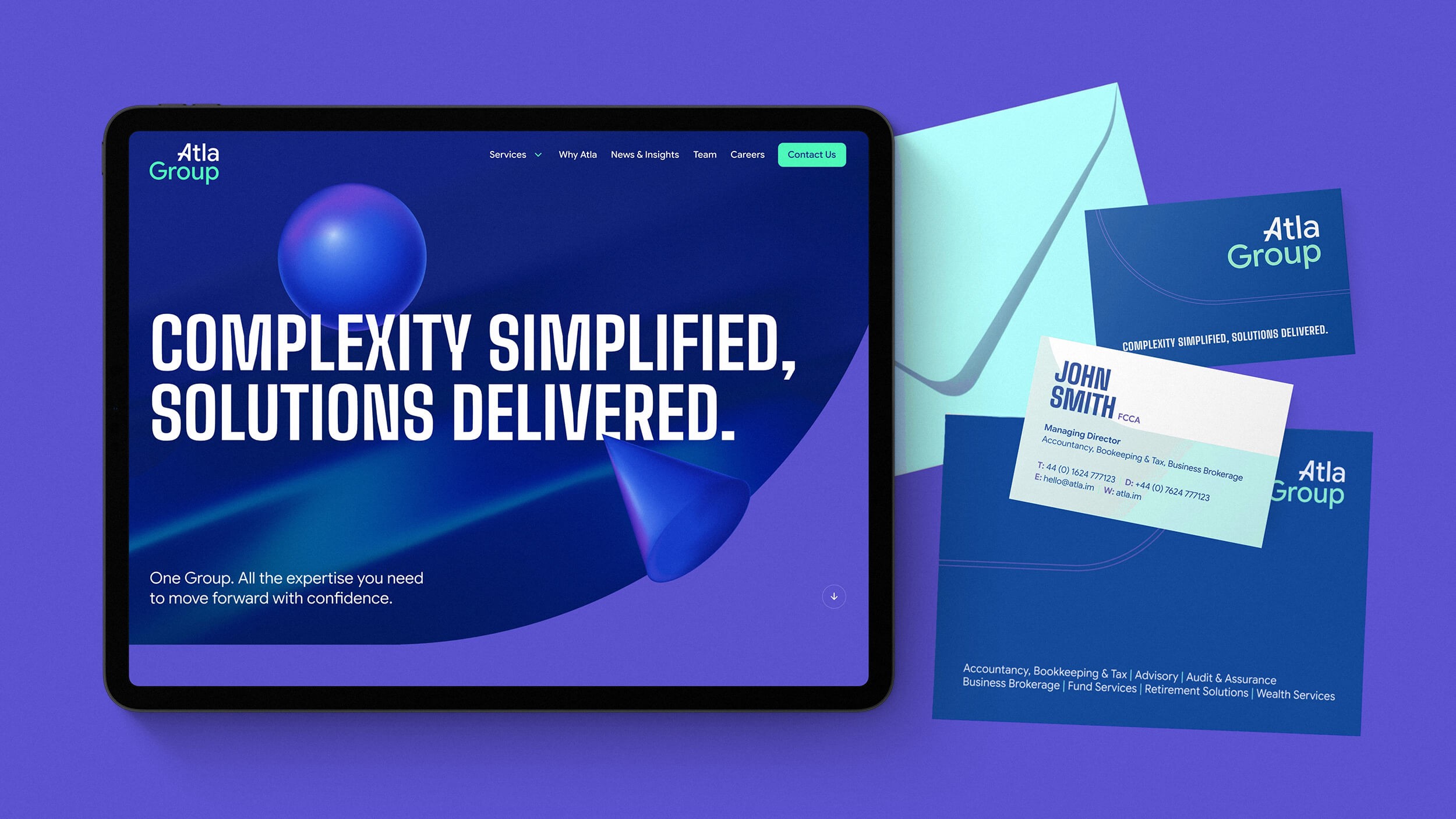
Case in point: Five years ago, we helped Atla Group build their identity when they initially formed as a multi-disciplinary group. It served them brilliantly. However, to stay ahead of a shifting market, we have just rolled out a complete 2026 rebrand to evolve their look and feel, ensuring they remain ahead of the curve. If your firm's brand and website look the same as they did five years ago, you are likely falling behind.
2. Shift from a "Shop Window" to a Lead Gen Tool
For too long, professional services websites have treated their digital presence like a glossy brochure - somewhere to list practice areas, post a few PDFs, and display an office address.
Your website shouldn't just be an online business card; it should be an active member of your business development team. Modern firms need intuitive user journeys, clear calls to action, interactive tools, and high-value insights that actively capture, nurture and qualify incoming leads.
3. It’s No Longer Just About SEO - Welcome to AEO
The digital playbook has fundamentally changed. While ranking on Google still matters, the rise of AI-driven search means professional service firms must now design and write websites optimised for AEO (Answer Engine Optimisation).
When clients ask AI models for regulatory breakdowns or provider recommendations, your insights need to be structured so these engines find you. Furthermore, AI has changed content writing forever. Cookie-cutter, AI-generated blog posts won't cut it anymore; your website content must lead with genuine, human thought leadership and deep expertise to cut through the digital noise.
4. Ditch the Cliché Corporate Imagery
If your current website features stock photos of handshakes, generic glass skyscrapers, or a gavel, it’s time for a change. Your web imagery doesn't have to be literal or stereotypical to convey professionalism. Instead, lean into abstract themes or unique visual vantage points that tell a story.
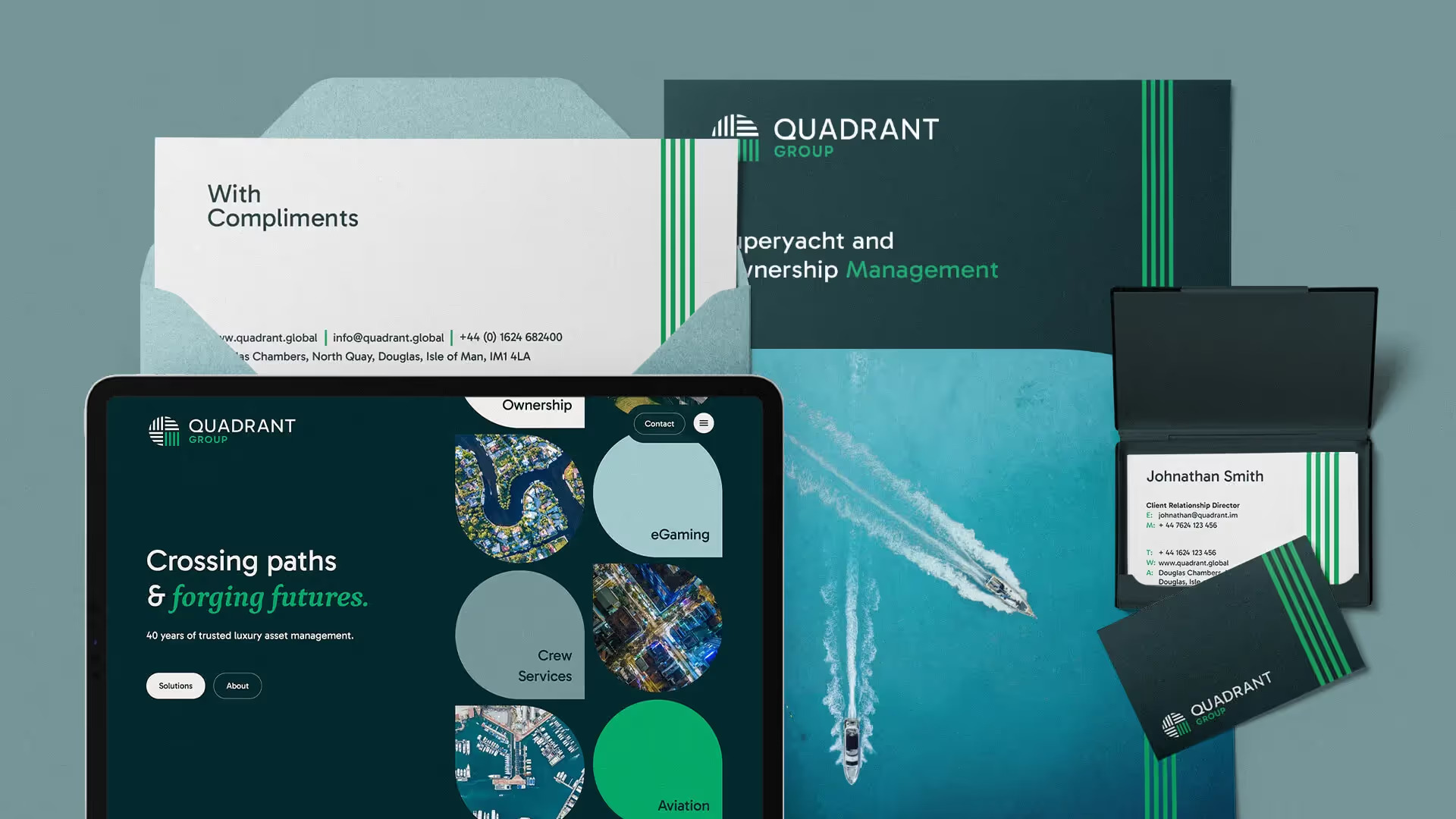
When working with Quadrant Group, we built a campaign headline around “crossing paths, forging futures.” Instead of corporate handshakes, we curated powerful, abstract images of crossing paths - think striking aerial shots of planes, boats, and highway junctions. It’s sophisticated, memorable and visually sets them apart from the sea of sameness.
5. Less is Often More (Simplicity Builds Trust)
When building a new website, there is a massive temptation to display every single piece of legislation, jurisdiction, industry award, and niche service line right on the homepage. Resist it.
You don’t have to say everything at once. The primary goal of your website is to build credibility and trust. A clean, uncluttered user experience allows your core value proposition to breathe, making it easier for a prospective client or intermediary to pick up the phone or send an inquiry.
6. Don’t Play it Safe - Be Bold and High-Impact
Many professional service providers are terrified of looking "unprofessional," which usually results in them looking exactly like all of their competitors. You can be highly compliant and professional while remaining bold, modern and high-impact.
When we refreshed Atla Group, we bypassed the safe corporate blues and greys. We introduced bold colours and abstract shapes, resulting in a website that feels more akin to a cutting-edge fintech platform. The result is a vibrant, interactive, and incredibly strong web presence that commands attention while delivering absolute corporate credibility.
7. Respect Your Heritage, But Evolve Your Site Every Two Years
Evolving doesn't mean erasing your history. You can maintain and respect your firm's heritage while consistently modernising your digital touchpoints. We recommend a visual and structural evolution of your web presence every two years to keep pace with technology and user expectations.
Look at Fortress Group. They have a deep-rooted heritage tied to their iconic 'Tower of Refuge' logo. We didn't scrap it - we modernised the icon and the site, taking their history and translating it seamlessly for a modern digital audience.

8. Understand Your Target Audiences (Deeply)
A website shouldn't just look pretty; it has to work for the specific people using it. Understanding your target demographic is crucial - not just for copywriting, but for the overall user experience (UX) and navigation.
Are you targeting institutional clients, high-net-worth individuals, tech founders, or legal intermediaries? Each audience interacts with websites differently. If your UX doesn’t match their specific browsing habits and intent, they will leave within seconds.
9. Lean into Personality
At the end of the day, professional services is a people business. Clients don't buy from corporate entities; they buy into people, trust, and relationships. Weaving the distinct personalities of your leadership team into the website design can be your ultimate differentiator.
When we did the brand and website for Maher Law, we didn’t build a faceless, cold legal portal. We focused heavily on the firm's founder, Tom Maher. By highlighting his specific dynamism and meticulous attention to detail through targeted copy, custom photography, and sharp layout choices, the website instantly communicates the exact human experience a client gets when they instruct the firm.

Building a modern professional services website requires moving past the comfort zone of "what we've always done." By treating your website as a dynamic lead generation engine, embracing bold aesthetics, optimising for AI search, and showcasing the human element of your firm, you transform your digital presence from an administrative expense into a genuine growth driver.
We've been through this playbook 10+ times. Let us guide yours.
From navigating complex multi-jurisdictional messaging to creating bespoke, abstract visual identities, we know what it takes to scale a professional services brand online.
Whether you're ready to rebrand tomorrow or just starting to look at your options for later this year, let's grab a coffee: hello@afundi.im
.jpg)